In Utah's dry climate mold growth almost always traces to a sudden mechanical failure such as a burst supply line, leaking water heater, or undrained swamp cooler rather than ambient humidity. Finished basements built on slab hide slow leaks behind drywall and under carpet for months until musty odors appear. Winter inversions and tight building envelopes also create condensation on north-facing walls and in unheated crawl spaces of Wasatch Back vacation homes.
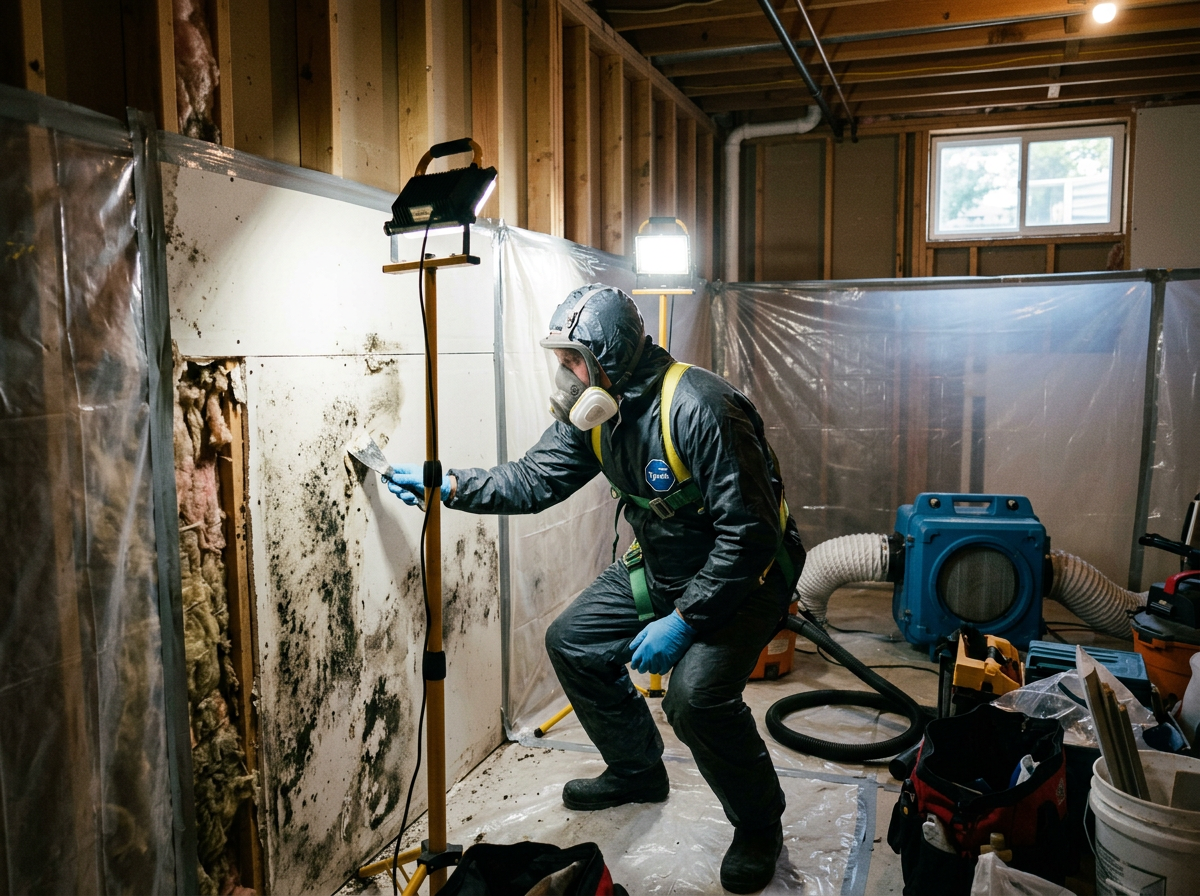
Mold removal work begins with isolating the affected area using plastic sheeting and negative air machines to keep spores from migrating to clean rooms. Technicians then cut out and bag saturated drywall, insulation, and baseboards before HEPA-vacuuming remaining surfaces and wiping with appropriate cleaners. Hidden cavities in framing or under subfloors are opened until no visible growth remains.
Jobs fail when the original water source is left unaddressed or when removal stops at the visible stain without checking adjacent cavities. Post-remediation verification includes moisture meter readings and visual inspection of every opened area before new materials are installed. Homeowners receive a written scope noting exactly which materials were removed versus treated in place.
Technician insight
In Springville, the thing that catches most people out with Mold Removal is finished basements on slab where a slow supply-line drip runs under carpet for an entire winter before anyone notices; once we open the wall we often find the leak traveled ten feet along the footing and soaked the bottom plate on two sides.
Springville Basement After Water Heater Leak
A homeowner noticed a musty smell in the finished basement three weeks after a water heater hose failed. We opened the affected wall and found wet insulation extending four feet past the visible stain. All saturated drywall and insulation were removed, the cavity was HEPA cleaned, and moisture readings returned to normal before the area was closed.
Mold Removal Services We Offer
✓Affected Material Removal
Cutting out and disposing of mold-impacted drywall, insulation, and trim while protecting unaffected areas of the home.
✓HEPA Vacuuming and Surface Cleaning
Thorough HEPA filtration of remaining surfaces followed by damp wiping to capture residual spores after material removal.
✓Containment and Negative Air Setup
Sealing the work zone with plastic barriers and running negative air machines to prevent cross-contamination during removal.
✓Post-Remediation Verification
Moisture meter checks and visual inspection of opened cavities to confirm all visible growth has been addressed before reconstruction.
✓Crawl Space and Attic Cleaning
Removal of mold on framing or sheathing in unheated spaces common after frozen pipe failures or ice dam leaks.
How it works
- 1
Source Identification And Containment
Locate the mechanical water failure and establish sealed barriers with negative air to isolate the work area.
- 2
Material Removal
Cut away and bag saturated drywall, insulation, and trim until all visible mold growth is eliminated.
- 3
HEPA Cleaning
Vacuum and wipe all remaining surfaces with HEPA equipment to capture airborne and settled spores.
- 4
Verification And Documentation
Perform moisture meter readings and visual checks, then provide a written record of removed materials.
Pricing
Final scope depends on the volume of materials that must be removed and the accessibility of hidden cavities; call for an on-site inspection and written quote.