
2026-09-14 ·
Clearing Mold From Ventilation Systems in Springville Schools
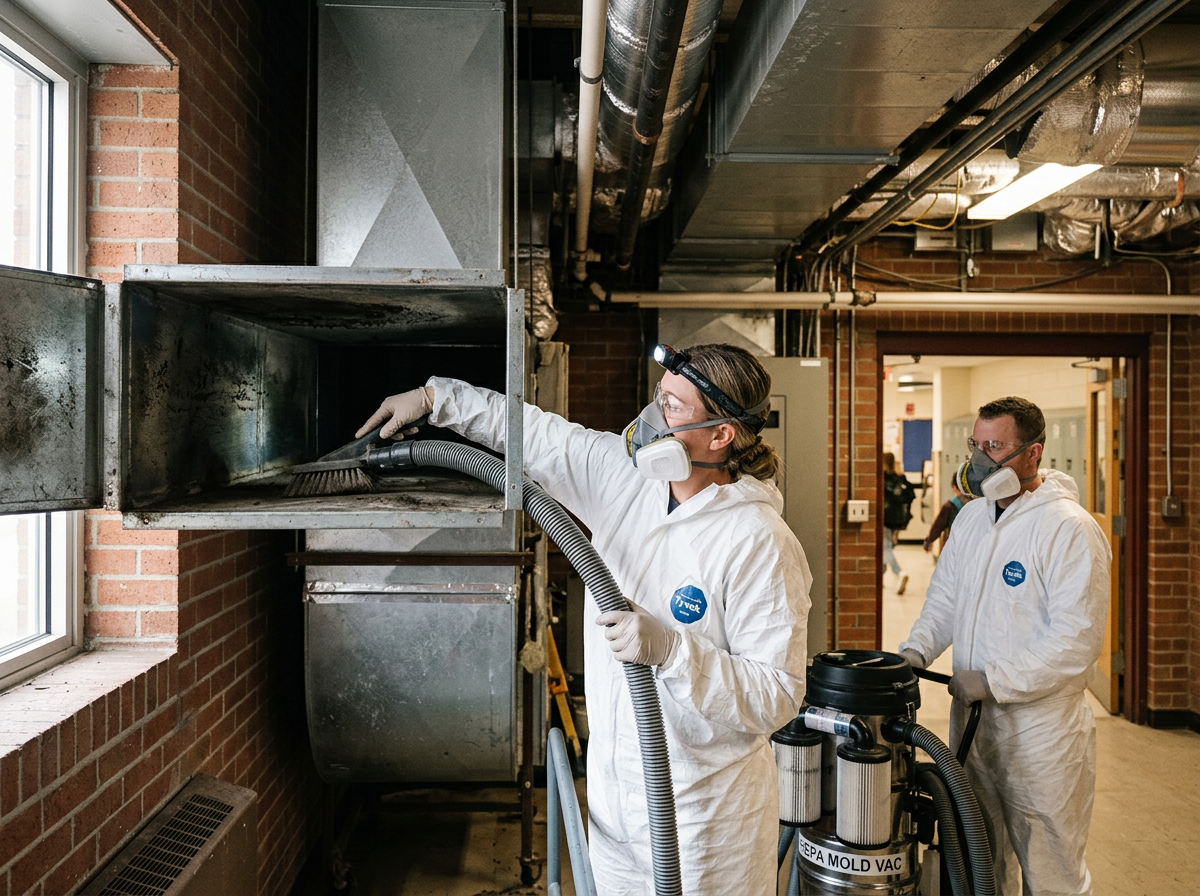
Clearing mold from ventilation systems in Springville schools starts with locating and stopping moisture sources such as roof leaks or undrained swamp coolers, followed by HEPA vacuuming and surface cleaning of ducts and coils. This sequence keeps the work targeted and avoids spreading spores through the building's air handlers.
Identifying Moisture Sources in School HVAC
Utah's arid climate means mold in school ventilation rarely starts from ambient humidity alone. Instead, it follows mechanical issues like frozen supply lines that burst when temperatures drop below 32°F, leaking appliance hoses, or ice dams along roof edges. Swamp coolers left undrained at season's end add moisture that migrates into return ducts. Finished spaces on slab foundations can hide slow leaks that travel upward into air handlers. Tight building envelopes combined with winter inversion trap warm moist air against cold exterior walls, creating condensation inside duct runs. Schools in Springville often see growth on coils and insulation after these events because the systems run continuously during occupied hours.
Regular checks for standing water in drain pans and clogged condensate lines catch problems before they reach ductwork. Technicians look for rusted seams or discolored insulation that signals past moisture. Once a leak is found, repairs such as new pipe insulation with R-6 or higher value or proper slope on drain lines stop the cycle. Without this step, any cleaning leaves conditions that allow regrowth within days.
Inspection Steps for Ventilation Ducts
Inspection begins at the air handling unit and moves outward through accessible sections of supply and return runs. Technicians use borescopes to examine interior surfaces without full demolition and check for visible growth on fiberglass liner or metal walls. Humidity readings above 60% inside the system during operation indicate ongoing moisture. They also test static pressure to spot blockages that could trap damp air. In Springville schools, particular attention goes to units serving lower levels where slab leaks are common and to rooftop units exposed to swamp cooler overflow.
Documentation of findings includes photos and notes on which sections connect to which rooms. This map guides targeted cleaning rather than whole-system disruption. Any visible mold prompts isolation of the affected zone with plastic sheeting and negative air machines to keep spores from entering occupied classrooms.
Cleaning and Drying Procedures
Cleaning starts with HEPA-filtered vacuums to remove loose debris and spores from accessible surfaces. Coils receive a no-rinse antimicrobial wash followed by thorough rinsing to avoid residue. Lined ducts may need liner removal if saturation has occurred, while bare metal receives mechanical brushing and disinfection. All work occurs with the system off and returns sealed. After cleaning, fans and dehumidifiers dry the interior to below 50% relative humidity before restart. This drying window usually takes 24 to 48 hours depending on airflow and outdoor conditions.
Schools coordinate cleaning during breaks or after hours to limit classroom impact. Filters are replaced with new MERV-13 or higher units once the system is dry. Follow-up checks one week later confirm moisture levels remain controlled.
Preventing Recurrence in Utah Conditions
Ongoing prevention focuses on source control rather than repeated cleaning. Installing float switches on swamp coolers stops operation when drain lines clog. Adding insulation to supply lines in unconditioned spaces reduces freeze risk during cold snaps. Adjusting economizer settings to avoid pulling in excessively cold air during inversion events limits condensation on coils. Linking these steps to broader water damage and moisture control practices helps facilities teams address leaks quickly. For persistent issues, professional mold remediation teams can evaluate entire air distribution paths. Related guidance on managing winter moisture appears in Preventing Attic Condensation During Utah Winters.