2026-09-14 ·
Mold Growth After Spring Snowmelt in Springville Basements
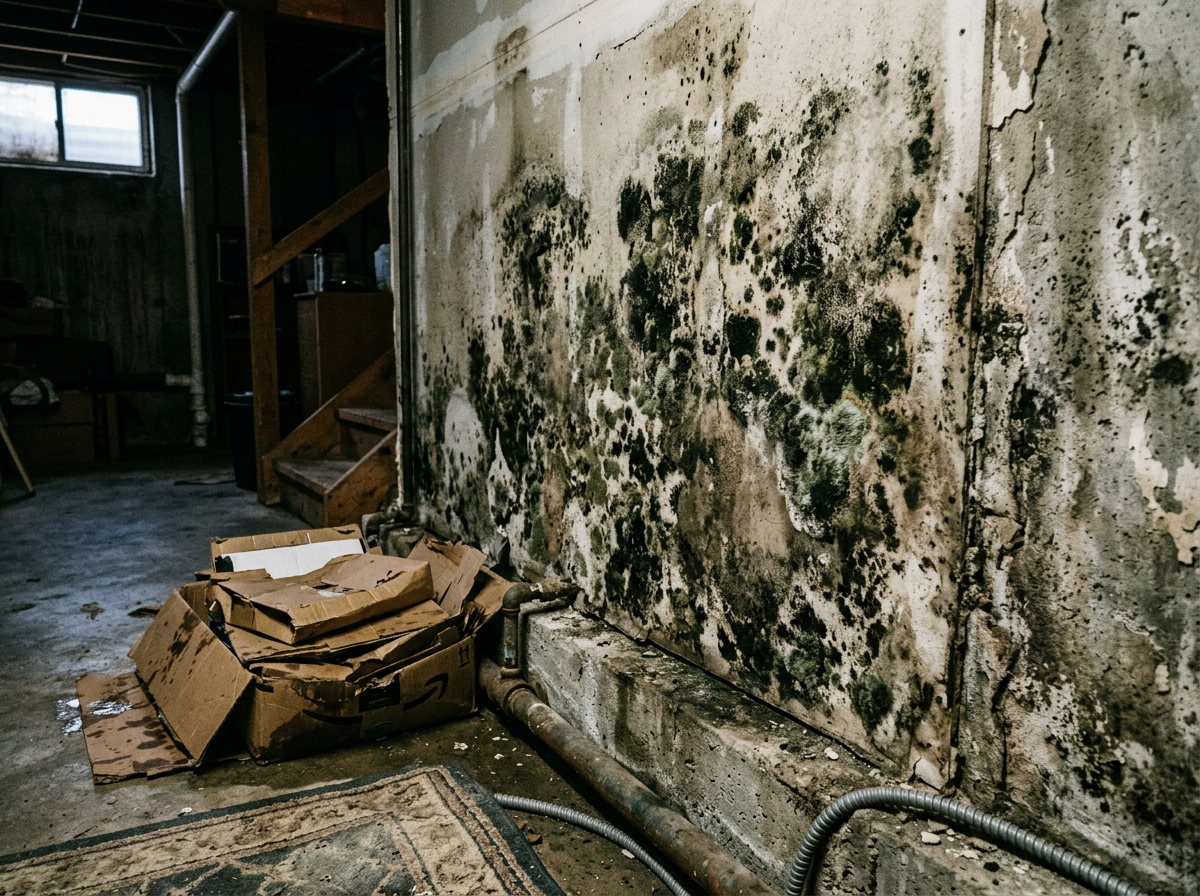
Spring snowmelt in Springville frequently leads to mold growth in basements when daytime temperatures rise above freezing and send water toward slab foundations or through small openings created by winter freeze-thaw cycles. Homes on the bench areas see this pattern most often because shallow soil layers allow meltwater to pool against concrete walls before it can drain away. Once moisture reaches finished surfaces or carpet pads, colonies can begin forming in as little as 48 hours if relative humidity stays above 60 percent indoors.
How Spring Snowmelt Reaches Basements
Springville receives 40 to 60 inches of snow most winters, and rapid warming in March and April turns that volume into surface runoff within a few days. When gutters overflow or downspouts empty too close to the foundation, water migrates under the slab or through cold joints in the concrete. Finished basements on grade hide the problem longest because carpet and drywall conceal slow seepage until dark staining appears along baseboards. Local conditions such as tight building envelopes and winter inversion layers keep indoor humidity elevated even after outdoor snow is gone, so residual moisture lingers rather than evaporating quickly.
Common Moisture Sources Tied to Snowmelt
Burst or previously frozen supply lines often leak once temperatures climb, sending water under cabinets or into wall cavities near the foundation. Swamp coolers left undrained over winter can also release stored water when lines thaw, adding unexpected volume near exterior walls. Roof leaks at ice-dam locations and appliance hoses that cracked during freezes contribute additional moisture that travels downward through floor assemblies. In each case the visible water may disappear within hours, yet the hidden dampness remains long enough for mold to colonize behind baseboards or under subfloors.
Why Cleaning Alone Does Not Stop Recurrence
Removing visible mold without correcting the entry point leaves the same conditions in place for the next melt season. Basement Mold Removal focuses on source identification first, then physical removal of affected materials, followed by drying to below 50 percent relative humidity. Water Damage and Moisture Control services address grading, drainage, and vapor barriers so that future snowmelt has fewer paths into the living space. Without these steps, spores that remain in the air or on surfaces can reactivate as soon as humidity rises again.
Practical Steps After Snowmelt
Homeowners can begin by checking exterior grading so soil slopes away from the foundation at least six inches over the first ten feet. Inspecting downspout extensions to ensure they discharge at least five feet from the wall prevents concentrated water near the slab. Inside, running a dehumidifier set to 45-50 percent and monitoring with a digital hygrometer shows whether drying is progressing. When staining or musty odors persist beyond a week, professional inspection becomes necessary to locate hidden pockets before colonies spread further into wall cavities or HVAC returns.
When to Consider Professional Assessment
If water entered through multiple points or affected more than a single room, targeted testing helps map the full extent of moisture. How Heavy Summer Storms Affect Foundation Moisture in Springville explains how the same entry points active after snowmelt can worsen during heavy rain events later in the year. Addressing both seasonal sources together reduces the chance of repeated remediation cycles. Salt Lake Remediation Co at 691 W Spring Creek Pl #250, Springville, UT 84663 provides assessments that focus on measurable moisture levels rather than assumptions about visible growth.