2026-09-14 ·
Preventing Attic Condensation During Utah Winters
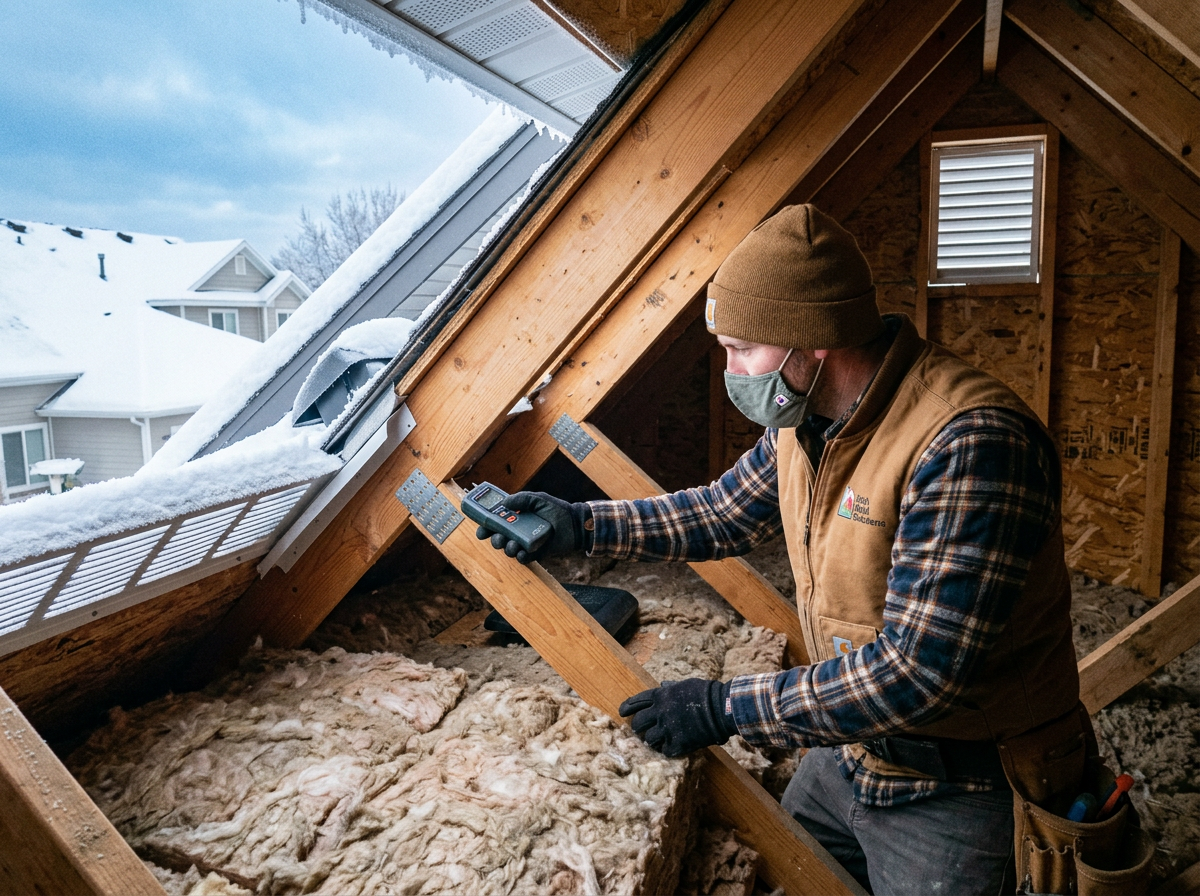
In Utah winters, keeping indoor relative humidity between 30% and 40% when outdoor temperatures fall below 32°F stops attic condensation before it starts on cold roof sheathing and exterior walls. This range accounts for the state's arid climate where mechanical failures like roof leaks or poor ventilation allow moisture to accumulate despite low outdoor humidity. Homeowners in Springville and surrounding areas see this issue worsen during inversion events that trap cold air and limit natural drying.
Understanding How Utah Winters Drive Attic Condensation
Winter temperature swings in Utah push warm, moist indoor air upward into unconditioned attics where it contacts roof decking cooled to near-freezing. The state's inversion layers trap this air mass, raising the dew point inside the attic and causing water to form on sheathing and rafters. Finished basements on slab foundations compound the problem by limiting drying paths, while swamp coolers left undrained from summer add residual moisture that migrates upward through ceiling penetrations. Without source correction, repeated condensation events create conditions where mold colonies establish within 24 to 48 hours on organic materials like wood and insulation.
Controlling Indoor Humidity Sources
Daily activities such as cooking, showering, and clothes drying release gallons of moisture that rise through ceiling leaks and recessed lights into the attic. Installing and using bathroom exhaust fans vented directly outdoors, rather than into the attic, removes this vapor at the source. Sealing around plumbing stacks, electrical boxes, and HVAC ducts with appropriate caulk or foam stops the stack effect that carries humid air upward during cold snaps. Monitoring with a simple hygrometer helps maintain the 30-40% target; when levels climb, running a dehumidifier in the living space reduces the load before it reaches the attic space.
Improving Ventilation and Air Sealing
Balanced attic ventilation allows moist air to escape before it condenses, typically through a combination of soffit intakes and ridge vents sized to the roof area. Air sealing the attic floor with spray foam or caulk at all penetrations prevents conditioned air from leaking into the cold space above. In Utah's climate, where winter lows routinely hit below freezing, adding insulation above the ceiling plane keeps the attic side warmer and reduces the temperature differential that drives condensation. Homeowners should inspect for ice dams along eaves, which signal warm air escaping and melting snow that refreezes and traps moisture against the roof deck.
Linking Moisture Issues to Broader Home Protection
Unchecked attic condensation often connects to other water events such as frozen supply lines or appliance hose failures that introduce additional humidity into the structure. Addressing these through targeted water damage and moisture control prevents the repeated wetting that allows mold to spread beyond the attic. Seasonal checks before listing a property help identify hidden condensation patterns early. For homes showing visible staining or musty odors, mold remediation focuses on removing growth after the moisture source is corrected rather than cleaning alone.
Knowing When Professional Assessment Helps
Persistent high humidity readings or visible frost on attic framing during cold periods indicate the need for a thorough inspection that identifies hidden leaks or insulation gaps. Professionals can map moisture levels across the roof deck and recommend targeted sealing or ventilation upgrades without unnecessary disruption. In Springville, where many homes feature tight envelopes built for energy efficiency, these assessments reveal how winter inversion amplifies small issues into larger condensation problems. Readers can review seasonal mold checks before selling a house in Springville for checklists that align with winter preparation steps.