
2026-09-14 ·
What to Expect When Testing for Mold in Older Provo Road Homes
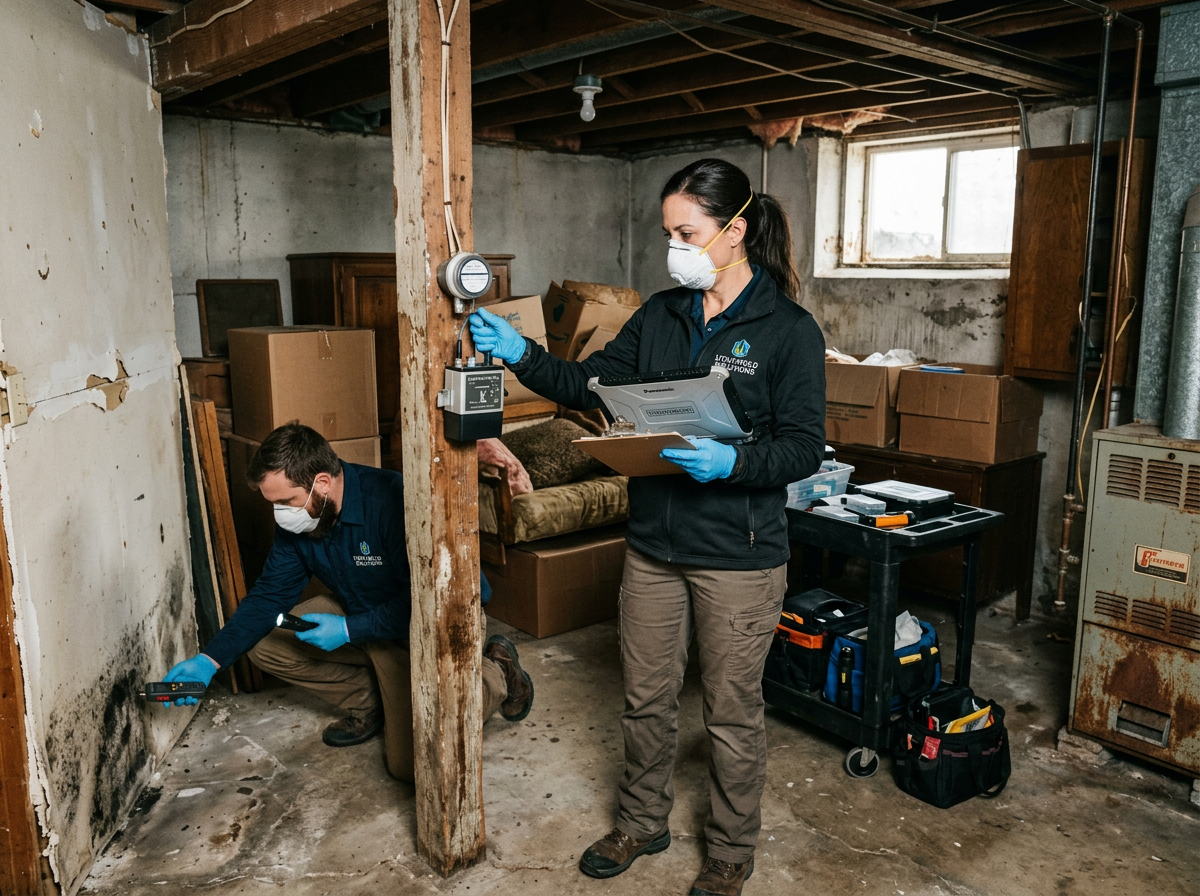
Testing for mold in older Provo Road homes starts with a visual inspection of basements, attics, and exterior walls followed by air or surface sampling that usually completes in one visit lasting 60 to 90 minutes. This approach accounts for Utah's dry climate where mold appears mainly after pipe bursts, ice dams, or undrained swamp coolers rather than ambient humidity alone. Homeowners should expect technicians to focus on finished basements on slab foundations and areas where winter inversion causes condensation on cold exterior walls.
Common Moisture Sources in Provo Homes
Older homes along Provo roads frequently develop leaks from 40-gallon water heaters or supply lines that freeze at 32°F when pipe insulation falls below R-3. Swamp coolers left undrained in fall add summer moisture that seeps into crawl spaces. Tight building envelopes trap indoor humidity above 55 percent during inversions, allowing growth on north-facing walls. Roof leaks around older chimneys and ice dams on unvented attics create hidden pockets behind plaster. These sources explain why cleaning alone fails without fixing the water entry point first.
The Testing Process Step by Step
Technicians begin outside the home checking grading and gutters for signs of poor drainage that push water toward foundations. Inside they use moisture meters on drywall and subfloors to locate elevated readings above 15 percent. Air samples are collected from multiple rooms and compared to outdoor controls to identify spore types common after appliance hose failures. Surface swabs target visible discoloration in bathrooms or laundry areas. Results return in 3 to 5 business days and include spore counts per cubic meter rather than simple presence or absence.
Interpreting Lab Reports for Utah Conditions
Reports list species such as Aspergillus or Penicillium that thrive after frozen supply line breaks in Provo winters. Elevated indoor levels relative to outside air indicate an active source rather than normal outdoor infiltration. Homeowners review moisture map photos that highlight specific walls or floors needing repair. The report notes humidity readings taken during the visit and flags areas where levels stayed above 60 percent. This data helps prioritize fixes like adding insulation to pipes or improving attic ventilation before any removal work begins.
Planning Repairs After Positive Findings
Once sources are confirmed, the next step involves correcting mechanical issues such as replacing leaking hoses or sealing roof penetrations. Mold inspection and testing can be followed by targeted mold remediation that removes affected materials while containing dust. For rental properties, additional guidance appears in related articles on mold remediation steps for rental properties in Utah County. Follow-up testing after repairs confirms levels have returned to outdoor baselines. This sequence prevents recurrence in the dry Utah climate where water events, not weather, drive most growth.